Best health insurance for freelancers in 2024 – Navigating the healthcare landscape as a freelancer can be daunting, but finding the best health insurance doesn’t have to be. In this comprehensive guide, we delve into the unique challenges freelancers face, the key features to consider, and the top insurance options available in 2024, empowering you to make informed decisions and secure the coverage you need.
With rising healthcare costs and the complexities of freelancer health insurance, understanding your options is crucial. We’ll explore different plan types, compare providers, and provide practical tips to help you choose the best plan for your specific needs and budget.
Freelancer Health Insurance Market Overview: Best Health Insurance For Freelancers In 2024
Freelancers, or independent contractors, face unique healthcare needs and challenges compared to traditional employees. The freelance economy has grown significantly in recent years, leading to an increasing demand for affordable and accessible health insurance options for this segment of the workforce.
Healthcare Needs of Freelancers
Freelancers typically do not have access to employer-sponsored health insurance, which leaves them responsible for securing their own coverage. They often have irregular income and may experience periods of unemployment or reduced earnings, making it difficult to maintain consistent health insurance coverage.
Freelancers also have specific healthcare needs that may differ from traditional employees. They may have higher rates of chronic conditions due to the physical demands of their work or the stress of running their own business. Additionally, they may need coverage for business-related expenses, such as equipment or liability insurance.
Trends in Freelancer Health Insurance
The freelancer health insurance market is evolving to meet the changing needs of this growing workforce. Insurers are offering more flexible and affordable plans tailored to the unique needs of freelancers. These plans may include features such as:
- Coverage for self-employment income
- Flexible payment options
- Access to telemedicine and virtual care
Despite these advancements, challenges remain in providing affordable and accessible health insurance to freelancers. Many freelancers still struggle to find coverage that meets their needs and budget.
Challenges in Obtaining Affordable Coverage, Best health insurance for freelancers in 2024
Freelancers face several challenges in obtaining affordable health insurance coverage, including:
- High premiums: Freelancers often pay higher premiums than traditional employees due to their lack of employer contributions.
- Limited plan options: Freelancers may have fewer plan options to choose from, which can limit their ability to find coverage that meets their needs.
- Lack of subsidies: Freelancers are not eligible for government subsidies, such as Medicaid or Medicare, which can make it difficult to afford coverage.
These challenges can make it difficult for freelancers to secure the health insurance coverage they need to protect themselves and their families.
Key Features to Consider

When choosing a health insurance plan, it’s crucial to consider key features that align with your specific needs and financial situation. These features include coverage, deductibles, co-pays, and out-of-pocket maximums.
For freelancers, securing comprehensive health insurance is crucial in 2024. However, when embarking on international adventures, it’s equally essential to consider top travel insurance for international trips in 2024. By safeguarding yourself against unexpected medical expenses and other travel-related emergencies, you can ensure peace of mind while exploring the world.
As you navigate the healthcare landscape for freelancers, remember to prioritize a plan that aligns with your specific needs and budget.
Understanding these factors will help you make an informed decision that meets your healthcare requirements and budget constraints.
Coverage
Coverage refers to the types of medical expenses and services covered by your health insurance plan. It’s important to assess the plan’s coverage for essential services such as doctor’s visits, hospital stays, prescription drugs, and preventive care.
Different plans may offer varying levels of coverage, so it’s important to compare and choose the plan that best aligns with your healthcare needs.
When exploring health insurance options for freelancers in 2024, consider factors such as coverage, premiums, and deductibles. Similarly, students living in dorms should prioritize renters insurance to protect their belongings. Top-rated renters insurance for students in dorms offers comprehensive coverage for electronics, furniture, and personal items.
Returning to health insurance for freelancers, it’s essential to compare plans and choose one that aligns with your specific needs and budget.
Deductibles
A deductible is the amount you must pay out-of-pocket before your insurance coverage kicks in. Higher deductibles typically result in lower monthly premiums, while lower deductibles come with higher premiums.
Consider your financial situation and risk tolerance when choosing a deductible. If you’re healthy and don’t anticipate significant medical expenses, a higher deductible may be a cost-effective option. However, if you have ongoing health concerns or expect high medical expenses, a lower deductible may be more suitable.
Co-pays
Co-pays are fixed amounts you pay for specific healthcare services, such as doctor’s visits or prescription drugs. They are typically lower than deductibles and are paid at the time of service.
Consider the frequency of your healthcare utilization and the co-pays associated with your plan. If you frequently visit the doctor or require regular prescriptions, choosing a plan with lower co-pays may be more cost-effective.
Out-of-Pocket Maximums
An out-of-pocket maximum is the most you will have to pay for covered medical expenses in a given year. Once you reach this limit, your insurance will cover 100% of eligible expenses.
Consider your health history, risk tolerance, and financial situation when choosing an out-of-pocket maximum. If you have a history of high medical expenses or anticipate significant healthcare needs, choosing a plan with a lower out-of-pocket maximum may provide greater peace of mind.
| Feature | Plan A | Plan B | Plan C |
|---|---|---|---|
| Coverage | Comprehensive coverage for essential services | Limited coverage for certain services | Extensive coverage including specialty care |
| Deductible | $2,500 | $1,000 | $500 |
| Co-pay for Doctor’s Visit | $25 | $15 | $10 |
| Out-of-Pocket Maximum | $5,000 | $3,000 | $2,000 |
Ultimately, the best health insurance plan for you will depend on your individual circumstances and financial situation. By considering the key features discussed above, you can make an informed decision that meets your healthcare needs and budget constraints.
Types of Health Insurance Plans for Freelancers
Freelancers have various health insurance plan options, each with advantages and disadvantages. Understanding the differences is crucial for making an informed decision.
Individual Plans
Individual plans are purchased directly from an insurance company and provide coverage for the freelancer only. They offer flexibility and customization options, but premiums can be higher than other plans. Examples include Blue Cross Blue Shield’s BlueEssentials plan and Kaiser Permanente’s Silver 60 plan.
Group Plans
Group plans are offered through an employer or association and typically cover employees or members. Freelancers can join these plans through professional organizations or freelance collectives. Group plans often have lower premiums but may have limited coverage options. An example is the Freelancers Union’s health insurance plan.
Association Plans
Association plans are offered by professional associations or organizations and are similar to group plans. Freelancers can join these plans if they meet certain criteria, such as being a member of the association. Association plans may offer specialized coverage options tailored to the needs of the specific profession. An example is the American Society of Journalists and Authors’ health insurance plan.
Best Health Insurance Companies for Freelancers
Choosing the right health insurance company is essential for freelancers. There are many factors to consider, such as coverage, affordability, and customer service. To help you make an informed decision, we’ve compiled a list of the top health insurance companies for freelancers.
We’ve compared the plans offered by these companies and created a table to help you see the key differences. We’ve also discussed the pros and cons of each company to help you make the best choice for your needs.
Top Health Insurance Companies for Freelancers
Here are the top health insurance companies for freelancers, based on our research:
- Blue Cross Blue Shield
- Cigna
- Kaiser Permanente
- UnitedHealthcare
- Aetna
Comparison of Health Insurance Plans
The following table compares the plans offered by the top health insurance companies for freelancers:
| Company | Plan | Coverage | Monthly Premium | Deductible | Out-of-Pocket Maximum |
|—|—|—|—|—|—|
| Blue Cross Blue Shield | Blue Choice PPO | Comprehensive | $250 | $1,000 | $6,000 |
| Cigna | Cigna Open Access Plus | Comprehensive | $300 | $1,500 | $7,500 |
| Kaiser Permanente | Kaiser Permanente Silver 70 | Comprehensive | $400 | $2,000 | $8,000 |
| UnitedHealthcare | UnitedHealthcare Choice Plus | Comprehensive | $350 | $1,200 | $7,000 |
| Aetna | Aetna Open Access HDHP | High-deductible | $200 | $2,500 | $9,000 |
Tips for Choosing the Best Health Insurance Plan
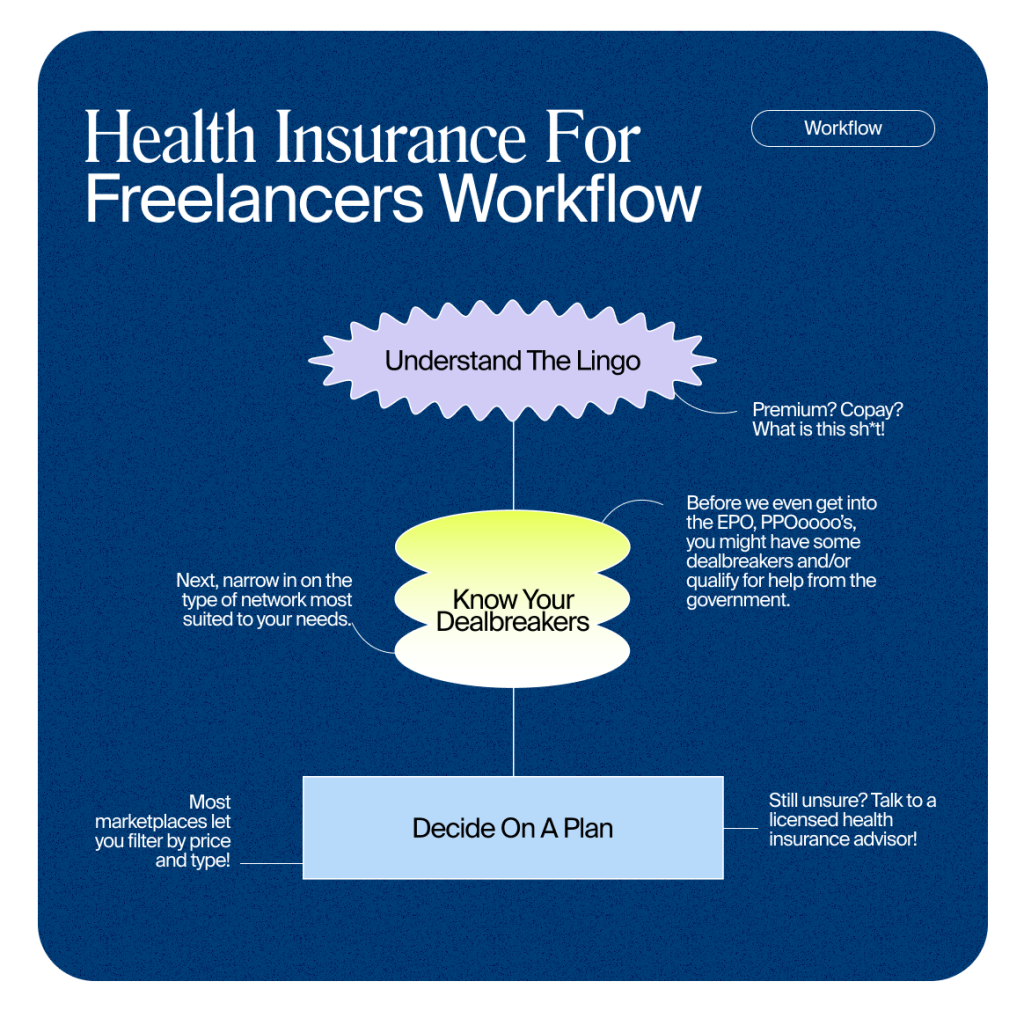
Freelancers should consider their healthcare needs and budget when selecting a health insurance plan. Understanding the different types of plans and coverage options available can help them make an informed decision.
To choose the best health insurance plan, freelancers should:
1. Assess Healthcare Needs
- Consider current and potential future health needs, including any pre-existing conditions.
- Estimate the frequency and type of medical services they may require.
- Determine if they need coverage for dental, vision, or other supplemental services.
2. Determine Budget
- Set a realistic budget for health insurance premiums and out-of-pocket costs.
- Consider the potential for unexpected medical expenses and factor them into the budget.
- Explore options for subsidies or tax credits that may reduce the cost of health insurance.
3. Compare Plan Options
- Research different types of health insurance plans, including HMOs, PPOs, and EPOs.
- Compare coverage levels, deductibles, copayments, and out-of-pocket maximums.
- Consider the network of providers and whether it includes their preferred doctors or hospitals.
4. Read Reviews and Ask for Recommendations
- Check online reviews and testimonials from other freelancers.
- Ask for recommendations from colleagues, friends, or family members who are freelancers.
- Consider consulting with a health insurance broker or agent for professional advice.
5. Make an Informed Decision
- Carefully consider the factors discussed above and weigh the pros and cons of each plan.
- Choose the plan that best meets their healthcare needs and budget.
- Enroll in the plan and ensure they understand the coverage details and payment process.
Case Studies and Success Stories

In the competitive landscape of freelancing, securing reliable and affordable health insurance can be a daunting task. However, numerous freelancers have successfully navigated the health insurance market and found solutions tailored to their unique needs. Their experiences and insights provide valuable guidance for fellow freelancers seeking comprehensive coverage.
These case studies highlight the challenges freelancers face, such as fluctuating income, lack of employer-sponsored plans, and pre-existing conditions. They also demonstrate the innovative strategies and resources freelancers have employed to overcome these obstacles and secure quality healthcare.
Sarah, a freelance writer
Sarah, a freelance writer with a pre-existing heart condition, struggled to find affordable health insurance that covered her medical expenses. Through research and consultations with insurance brokers, she discovered a high-deductible health plan (HDHP) with a health savings account (HSA). The HDHP offered lower monthly premiums, while the HSA allowed her to save tax-free for medical expenses. By combining these options, Sarah secured comprehensive coverage while minimizing her out-of-pocket costs.
John, a freelance software developer
John, a freelance software developer with a fluctuating income, faced challenges in maintaining continuous health insurance coverage. He enrolled in a short-term health insurance plan that provided coverage for a limited duration. When his income increased, he transitioned to a traditional health insurance plan with a higher monthly premium but more comprehensive benefits. This flexible approach allowed John to adjust his coverage based on his income and healthcare needs.